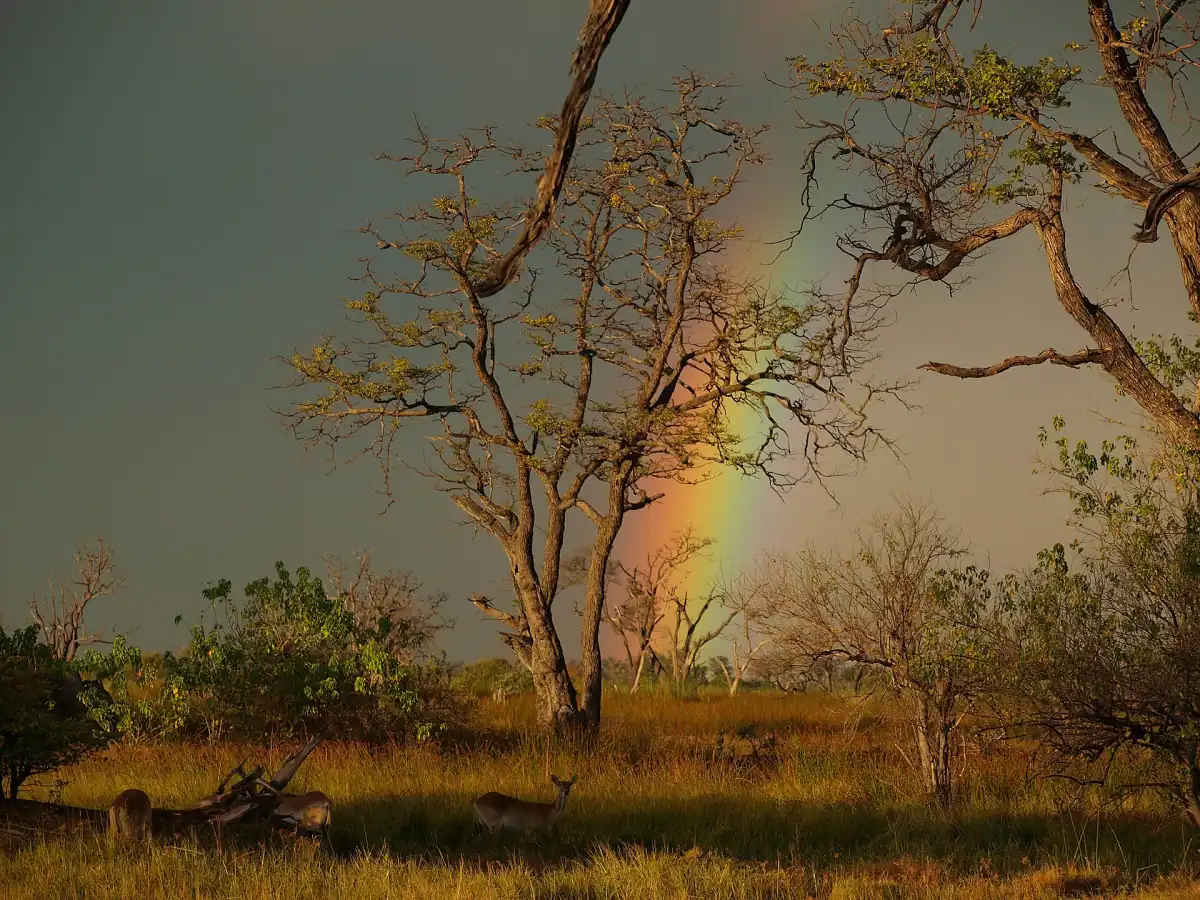
The Moremi best time to visit: rain and flood are different
Many visitors assume the Delta floods when it rains. It does not. The rainy season runs from about November to March, with heavy showers, flash floods and unreliable roads. The annual Okavango flood is fed by rain in Angola and arrives during Botswana's dry season, with UNESCO describing the flood pulse especially for June and July.
For Moremi specifically, one operator at Mombo describes a dry season from May to October, peak flood in July and August and a green season from November to April. How the water reaches a given channel depends on the year's inflow, the channel and local rain, so there is no single arrival date for the whole reserve.

An eight-day safari combining the Delta and Moremi
This trip splits its days between the Inner Delta and Moremi, so you can compare both areas on one booking.
Hand-picked tours, booked through Viator. Prices are indicative starting prices in US dollars (as of October 2026). Tap a tour for live availability and the current price in your currency.

Trips into Moremi and the Delta
Check each itinerary for the Moremi visit, the season it runs in and what is included.
Weather in Maun: historic figures, not a forecast
There is no weather station in the reserve. The nearest long-term figures come from Maun, about 100 km to the south, and the German weather service table behind them is old: temperatures cover 1941 to 1970 and rainfall 1931 to 1970. Read them as a historic pattern for a neighbouring town, not as 2026 values.
On that basis, daily highs sit around 25 to 28 degrees from May to August and climb to about 35 degrees in October, the hottest month. Nights are coolest in June and July, with lows around 6 degrees. Rain is concentrated from November to March, with January the wettest month at roughly 104 mm, and the yearly total is about 452 mm. June, July and August see almost no rain.
2026 is not a normal planning year
In March 2026 flooding closed access to the reserve, and in April it reopened in a limited way. By late May the authorities still reported high water and some impassable sections. A dry-season visit therefore does not automatically mean dry tracks, and a rainy-season visit is not automatically closed.
The current status of Third Bridge and Mboma is unknown to us: September traveller reports contradict a continuing Third Bridge closure, and one agent still reports Mboma as closed. Check conditions directly before you travel, and do not plan a route from Third Bridge to Xakanaxa as if it were always open. Road details are in the self-drive guide, and the wildlife you can expect in each season is covered under Moremi wildlife.
Choosing your months
The dry months bring clearer visibility and animals concentrating near permanent water, and the flood adds a lot of water to the Delta's channels. The green season brings fresh growth, young animals and many birds, with more mud, more heat and the risk of closed or difficult roads. Neither is simply better, and your choice should follow your vehicle, your tolerance for uncertain access and how flexible your dates are.
Malaria transmission is documented for the Okavango area, and the rainy season should not be read as a safe window. Get travel-medicine advice before you go. For gate and fee planning see entrance fees.
Once your months are set, see what to do in Moremi for ideas on the ground.
Timing questions
Does the Okavango flood arrive when it rains?
No. The flood comes from Angola and reaches the Delta during the dry season. Local rain in November to March is a separate matter.
When is the water highest in Moremi?
One Mombo operator gives July and August, but timing varies by channel and year. No single date applies to the whole reserve.
Are the Maun climate figures current?
No. They are historic normals from 1931 to 1970 for a neighbouring town, useful for the pattern only.
Will the roads be open in the dry season?
Not necessarily. Closures in spring 2026 show that high water can affect access in any month, so confirm conditions before travelling.